This touches about the subject areas of language Speak to and etymology, semantics and the expressiveness of many specifically colloquial phenomena. An evaluation is carried out to ascertain the extent to which we can trace parallels to universally utilized ways of linguistic creative imagination.
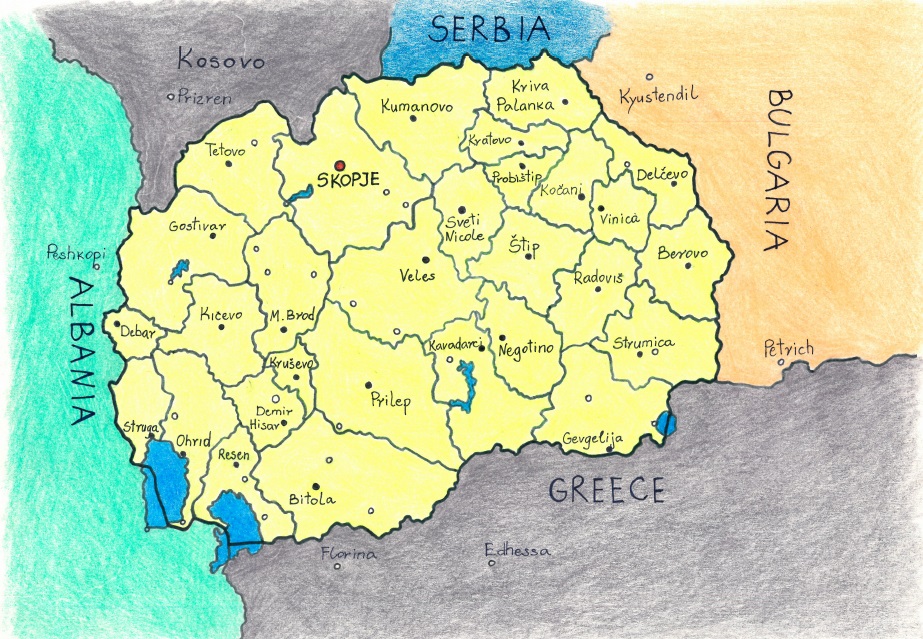
[30] The Western group of dialects may be subdivided into smaller dialectal territories, the most important group of which incorporates the central dialects.[66] The linguistic territory where Macedonian dialects ended up spoken also span outdoors the country and throughout the region of Macedonia, together with Pirin Macedonia into Bulgaria and Aegean Macedonia into Greece.[19]
[119] The exact same 12 months Bulgaria revoked its recognition of Macedonian nationhood and language and implicitly resumed its prewar place of their non-existence.[a hundred and twenty] In 1999 The federal government in Sofia signed a Joint Declaration while in the official languages of The 2 nations around the world, marking The very first time it agreed to sign a bilateral settlement prepared in Macedonian.[121] Dialect professionals in the Bulgarian language make reference to the Macedonian language as македонска езикова норма (Macedonian linguistic norm) of the Bulgarian language.[ten] As of 2019, disputes concerning the language and its origins are ongoing in educational and political circles in the two nations around the world.
Together with its Most important functions, the essential is applied to point actions up to now, Everlasting truths as is the situation in sayings plus a situation. The Macedonian conditional is conjugated in precisely the same way for all three individuals utilizing the particle би and the verbal l-type, би читал (I/you/he would read through).[eighty]
Linguists distinguish 29 dialects of Macedonian, with linguistic discrepancies separating Western and Eastern teams of dialects. Some attributes of Macedonian grammar are using a dynamic anxiety that falls over the antepenultimate syllable, 3 suffixed deictic articles that reveal noun position in reference to your speaker and the use of basic and complex verb tenses.
This paper investigates the linguistic landscape of Dubrovnik and Kotor over the Southeastern Adriatic Coastline, and Mytilene within the north Aegean attempting a theorization of its findings on the intersection of (socio)linguistics, ethnography, and semiotics, which has obtained ground since the platform of selection in linguistic landscape (LL) investigation. I argue the influx of the two visitors and refugees, despite the evident dissimilarities concerning The 2 teams, has had radical repercussions to the LL which have up to now attracted virtually no attention in the applicable literature. And nonetheless, tourism as well as arrival of recent populations have significant and lasting results around the LL which may only be sufficiently investigated by systematic ethnographic scientific tests on the semiotic implies employed in inscribing it.
Macedonian has produced a grammatical classification which specifies the opposition of witnessed and documented steps (also referred to as renarration). For each this grammatical category, one can distinguish involving минато определено i.e. definite past, denoting functions which the speaker witnessed at a presented definite time stage, and минато неопределено i.e. indefinite earlier denoting situations that didn't happen in a definite time point or functions reported to the speaker, excluding time part in the latter situation.
seven million people, it serves because the official language of North Macedonia.[five] Most speakers can be found from the state and its diaspora, with a smaller quantity of speakers all over the transnational area of Macedonia. Macedonian is also a recognized minority language in parts of Albania, Bosnia and Herzegovina, Romania, and Serbia and it is spoken by expatriate communities predominantly in Australia, Canada, and the United States.
This paper investigates the linguistic landscape of Dubrovnik and Kotor about the Sprachentwicklung im Balkanraum Southeastern Adriatic coast, and Mytilene in the north Aegean trying a theorization of its conclusions with the intersection of (socio)linguistics, ethnography, and semiotics, that has acquired floor as the platform of alternative in linguistic landscape (LL) investigate. I argue the inflow of both visitors and refugees, Regardless of the apparent discrepancies between the two teams, has experienced radical consequences to the LL that have so far attracted nearly no awareness in the pertinent literature.
Länder, in denen Muttersprachler einen Anteil von nur wenigen tausend oder gar hundert Menschen haben oder Länder mit einem Anteil deutlich unter 1% werden hier nicht mehr gelistet.
Entdecke, wie das Lernen einer Sprache Spaß macht und dir leicht fallen wird – der Kurs motiviert dich wirklich jeden Tag zu lernen. Wähle einfach aus einer von über 80 verschieden Sprachen.
The Digital breakdown of idiomaticity in A great deal of present-day Serbian use is as compared to known symptoms of language endangerment.
This paper presents three kinds of expressions produced from the semantic modify, which can be most frequently recorded inside the Slovenian! Linguistic! Atlas. These are generally metonymic, metaphorical and hyperbolic expressions. The final Component of the paper emphasises the issues of exceptional presumably metonymic expressions wherever it can be unclear whether they certainly are a result of a semantic change, or an mistake.
Macedonian and Bulgarian are divergent through the remaining South Slavic languages in that they don't use noun scenarios (aside from the vocative, and apart from some traces of as soon as productive inflections nevertheless identified scattered through both of these) and also have dropped the infinitive.[20] They're also the sole Slavic languages with any definite articles or blog posts (contrary to typical Bulgarian, which works by using just one short article, typical Macedonian together with some south-japanese Bulgarian dialects[21] Have a very list of 3 deictic content articles: unspecified, proximal and distal definite write-up).
Proper nouns are for every definition definite and so are not typically made use of together with an posting, Despite the fact that exceptions exist within the spoken and literary language for instance Совчето, Марето, Надето to show thoughts of endearment to a person.
^two Inherited Slavic /x/ was misplaced from the Western dialects of Macedonian on which the regular relies, owning turn out to be zero to begin with and mostly /v/ normally. /x/ turned A part of the common language in the introduction of new foreign terms (e.
Welche Sprache spricht man in Mazedonien?
Viele Menschen stellen sich die Frage: Welche Sprache spricht man in Mazedonien? Die offizielle und am weitesten verbreitete Sprache ist Mazedonisch. Sie wird von der Mehrheit der Bevölkerung als Muttersprache gesprochen und dient als Amtssprache in Verwaltung, Politik, Bildung und Medien. Im alltäglichen Leben ist Mazedonisch allgegenwärtig und verbindet Menschen unterschiedlicher Generationen.
Neben der mazedonischen Sprache existieren jedoch weitere Sprachen, die von ethnischen Minderheiten gesprochen werden. Besonders Albanisch nimmt eine bedeutende Stellung ein und wird in bestimmten Sprache in Mazedonien Regionen auch offiziell verwendet. Diese sprachliche Vielfalt ist ein charakteristisches Merkmal Mazedoniens und zeigt die multikulturelle Struktur des Landes.
Mazedonische Sprache: Herkunft und Besonderheiten
Die Mazedonische Sprache gehört zur südslawischen Sprachfamilie und ist eng mit dem Bulgarischen und Serbischen verwandt. Trotz dieser Nähe besitzt sie eine eigenständige grammatikalische Struktur und einen eigenen Wortschatz. Geschrieben wird Mazedonisch mit dem kyrillischen Alphabet, das speziell an die Lautstruktur der Sprache angepasst wurde.
Ein besonderes Merkmal der mazedonischen Sprache ist ihre vergleichsweise einfache Grammatik im Vergleich zu anderen slawischen Sprachen. Bestimmte Artikel werden direkt an das Substantiv angehängt, was sie von vielen europäischen Sprachen unterscheidet. Diese sprachlichen Eigenschaften machen Mazedonisch sowohl einzigartig als auch interessant für Sprachwissenschaftler.
Sprache in Mazedonien: Alltag und Mehrsprachigkeit
Die Sprache in Mazedonien ist stark von Mehrsprachigkeit geprägt. Aufgrund der ethnischen Vielfalt des Landes werden im Alltag häufig mehrere Sprachen parallel verwendet. In vielen Städten ist es üblich, dass Menschen Mazedonisch und Albanisch oder andere Sprachen fließend sprechen.
Die mazedonische Verfassung erkennt die sprachlichen Rechte von Minderheiten an, was zu einem offenen und inklusiven Sprachsystem geführt hat. In Schulen, öffentlichen Institutionen und sogar im politischen Diskurs ist Mehrsprachigkeit fest verankert. Diese Praxis trägt dazu bei, den sozialen Zusammenhalt zu stärken und kulturelle Unterschiede zu respektieren.
Sprachentwicklung im Balkanraum: Historische Einflüsse
Die Sprachentwicklung im Balkanraum ist das Ergebnis jahrhundertelanger historischer Prozesse. Der Balkan war stets ein Schnittpunkt verschiedener Kulturen, Völker und Reiche. Diese kontinuierlichen Begegnungen führten dazu, dass sich Sprachen gegenseitig beeinflussten und gemeinsame Strukturen entwickelten.
Auch die mazedonische Sprache wurde durch diese Entwicklungen geprägt. Sie enthält zahlreiche Lehnwörter aus dem Türkischen, Griechischen und Albanischen. Gleichzeitig teilt sie grammatikalische Merkmale mit anderen Balkan-Sprachen, obwohl diese unterschiedlichen Sprachfamilien angehören. Dieses Phänomen macht den Balkan sprachwissenschaftlich besonders interessant.
Historische Entwicklung der mazedonischen Sprache
Die mazedonische Sprache wurde erst Mitte des 20. Jahrhunderts offiziell als eigenständige Sprache anerkannt. Im Jahr 1945 begann die Standardisierung, bei der eine einheitliche Grammatik und Rechtschreibung festgelegt wurden. Dieser Prozess war entscheidend für die Entwicklung einer modernen Literatursprache.
Seitdem hat sich Mazedonisch stetig weiterentwickelt und ist heute in Literatur, Journalismus, Film und digitalen Medien präsent. Die Sprache wurde zu einem wichtigen Symbol nationaler Identität und kultureller Selbstbestimmung.